Explore Borobudur, Indonesia’s majestic 9th-century Buddhist temple. Discover its ancient reliefs, stupas, and spiritual journey in this UNESCO World Heritage site.
Borobudur: Unveiling the World’s Largest Buddhist Temple
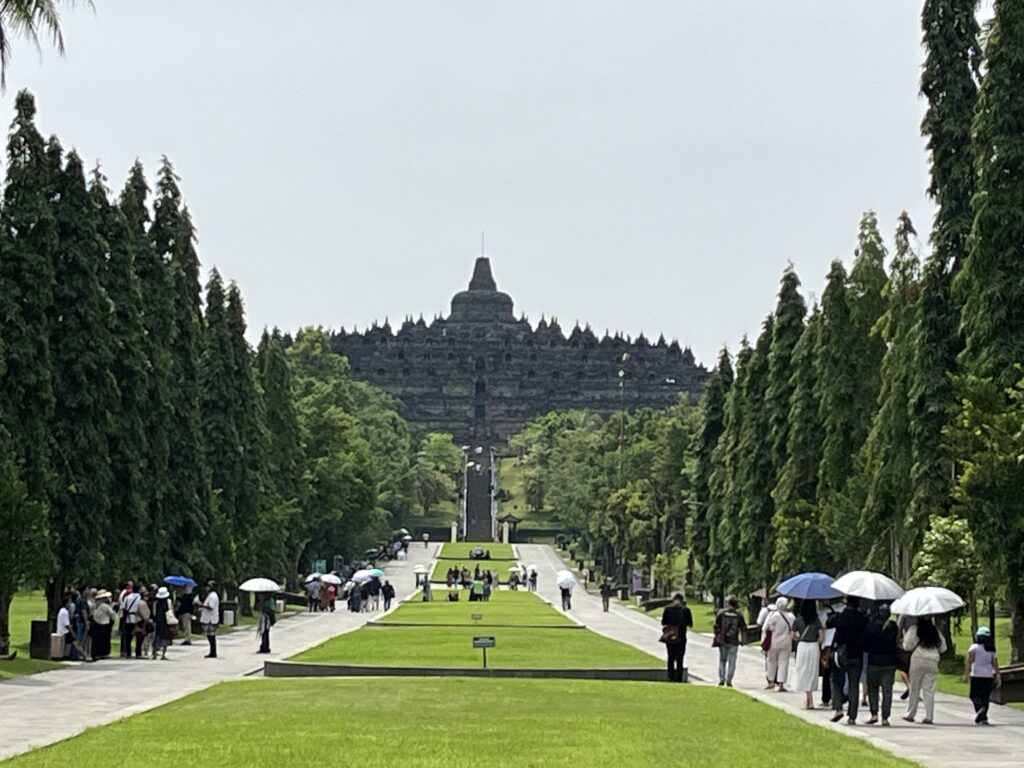
Rising from the fertile plains of Central Java, shrouded in morning mist and spiritual significance, lies Borobudur. This isn’t just a temple; it’s a stone encyclopedia of Buddhist teachings, a breathtaking architectural marvel, and the largest Buddhist monument on Earth. A UNESCO World Heritage Site and Indonesia’s most iconic landmark, Borobudur is a destination that transcends tourism, offering a profound journey into history, art, and spirituality.
Built in the 9th century under the Sailendra dynasty, Borobudur’s origins are as mysterious as they are ancient. For centuries, it lay hidden under volcanic ash and jungle growth, abandoned and forgotten, until its rediscovery by Sir Thomas Stamford Raffles in 1815. The subsequent restoration, a massive UNESCO-led project from 1975 to 1982, returned this masterpiece to its former glory.
A Mandala in Stone: The Architecture of Enlightenment
Borobudur’s design is a masterpiece of symbolic architecture. It takes the form of a massive three-dimensional mandala, representing both the Buddhist cosmos and the path to enlightenment. The temple is constructed from over two million blocks of andesite stone, assembled without any mortar. Instead, intricate interlocking joints hold the structure together, a testament to the advanced engineering of its time.
The pilgrim’s journey through Borobudur is a deliberate, ascending path. It is not a building you enter, but a structure you climb, moving through different realms of Buddhist cosmology.
The Journey Through Three Realms
- Kamadhatu (The World of Desires): The massive base of Borobudur, now largely hidden, represents the world bound by passion and desire. It features 160 relief panels depicting the law of karma (Karmavibhangga), showing the cause and effect of worldly deeds. This hidden foot symbolizes the base instincts we must overcome.
- Rupadhatu (The World of Forms): Ascending to the first four square terraces, you enter the “world of forms.” Here, you walk through two miles of intricately carved narrative galleries. Over 1,460 exquisite relief panels tell the stories of the Buddha’s previous lives (Jataka) and his final journey to enlightenment (Lalitavistara). These stone carvings are not merely decorations; they are a sacred text in visual form, guiding the pilgrim. This section is adorned with 432 serene Buddha statues seated in niches.
- Arupadhatu (The World of Formlessness): The journey culminates at the three circular terraces, representing the highest realm, formlessness. Here, the square, worldly forms give way to the circular, infinite. The narrative reliefs disappear, replaced by 72 latticed stupas, each containing a statue of the Buddha. The central and largest stupa, crowning the monument, is empty. This emptiness symbolizes perfect enlightenment, nirvana, a state beyond form and description.
The Magic of a Borobudur Sunrise
For many, the ultimate Borobudur experience is witnessing sunrise from its summit. Arriving in the pre-dawn darkness and climbing the ancient steps as the sky lightens is a magical ritual. As the sun ascends, it burns off the mist from the surrounding volcanoes, particularly the majestic Mount Merapi. The first rays of light illuminate the stone, causing the stupas and Buddha statues to cast long, dramatic shadows. The atmosphere is one of pure tranquility and awe, making the early wake-up call utterly worthwhile.
Essential Tips for Your Visit
· Go for Sunrise: Book the special “Borobudur Sunrise” tour. It’s more expensive but offers a quieter, more spiritual experience before the main crowds arrive.
· Hire a Guide: To truly appreciate the monument’s profound symbolism and stories, a knowledgeable local guide is invaluable.
· Dress Respectfully: As a sacred site, modest clothing is recommended. Cover your shoulders and knees.
· Wear Comfortable Shoes: You will be doing a significant amount of walking and climbing on stone steps.
· Combine with Prambanan: Many tours combine Borobudur with the nearby Prambanan Temple Complex, a spectacular Hindu counterpart, offering a perfect day of cultural immersion.
Borobudur is more than a collection of stones; it is a living lesson in stone. It is a physical manifestation of a spiritual journey, inviting every visitor to walk the path from the worldly to the sublime. To stand at its summit, surrounded by the bell-shaped stupas against a backdrop of Java’s volcanoes, is to connect with an ancient, enduring quest for wisdom and peace. It is an unforgettable encounter with one of humanity’s greatest cultural achievements.